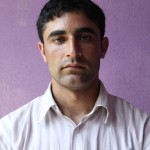
A journalist dissatisfied with his work in the mainstream and a committed Right to Information activist, Sajjad Rasool from Badgam, Kashmir is concerned with the wayward development of his state. In spite of being rich in natural resources and one of the major producers of power, many people in the state still have to manage without basic amenities. According to…
Earlier in 2013 the Irrigation and Public Health Engineering Minister, Sham Lal Sharma admitted that around 40% of Kashmir’s population still does not have access to safe drinking water.
In this video Community Correspondent Sajad Rasool takes the long walk with women from Darmuhalla village in Gurwath who trek 2 km each day to get access to water.
Sometime in 2011 the people of the village were told that the existing pipeline, which supplied water from the spring nearby, would be removed and a new one would be laid down in its place. The prospect of a new pipeline that would ensure a constant supply of water felt like nothing short of a miracle for the people.
Two years later, there is no pipeline on the horizon. The villagers say that the Public Works Department has released the funds but the work is yet to start. One can only speculate why this is. Some believe that the workers were bribed while others believe that the pipes were removed and sold off.
“Our children often fall sick with typhoid after drinking polluted water from stream,” says one exasperated mother.
Sajad tells us that the situation is the same across Jammu and Kashmir.
“There are so many streams and ponds in the area but most are polluted as no one bothers to maintain them. To top that, in the absence of any proper networks to bring people water, they are forced to use those same dirty sources to meet their needs. Things get even worse in the winters as most of the area is under 2 inches of snow. Since people can’t walk to water sources they just melt the ice around them and use that. I tried to mobilise the people into filing an RTI but they have lost all motivation.
A few days ago, in another village in Budgam, 100 people fell sick because an animal had died in the pond and the officials hadn’t removed it. The local MLA didn’t allow any action to be taken against the negligent officials. This sort of apathy is nothing but foolish,“ says Sajad.
Read More:
http://freepresskashmir.com/potable-water-for-all-a-distant-dream-in-kashmir/
http://www.reflectionedu.com/attachments/File/Barnolipi/4_12_Water.pdf
Inspiration can come from many sources, but one of the most powerful is seeing someone walk the path before you. Our Community Correspondent, Syed Amir Abbas found his inspiration in Stalin K., the founding director of Video Volunteers. “I met Stalin at VV’s national meet in 2017 and I...
If you ask Video Volunteers’ Community Correspondent Bideshini Patel to rate her childhood on a scale of 1-10, she would probably give it a negative marking due to the neglect and abuse she faced. But if you ask her to evaluate her professional life as an impactful journalist, resolving basic...